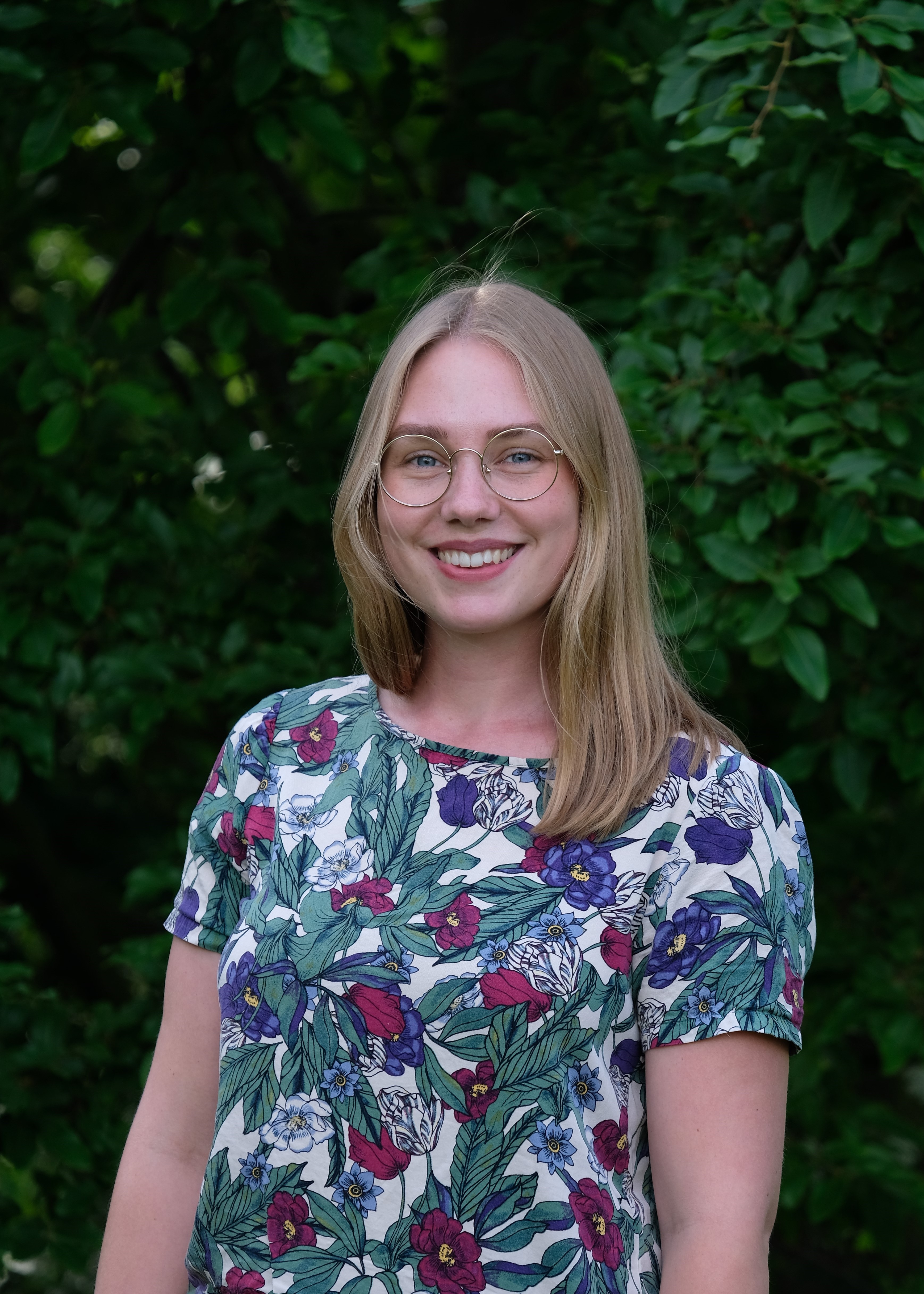
Ann-Kathrine Havemose

Danish Lecturer
phone 604 827 6394
location_on Buchanan Tower 905
Department Program
Education

Master of Arts in Comparative Literature, Aarhus University

Bachelor in Comparative Literature and Linguistics from Aarhus University and Celtic Civilization from University College Cork


About

Ann-Kathrine Havemose is the lecturer of Danish and Scandinavian studies. She is a native Danish speaker, and has an MA in comparative literature and general linguistics from Aarhus University, Denmark, while also having studied Celtic Civilization and Irish folklore at University College Cork, Ireland.

Ann-Kathrine specialises in the performative use of folktales in contemporary Scandinavian picture books – her most recent work focusing on the practical use of The Three Billy Goats Gruff in Danish kindergartens. Her research interests include folklore, performativity studies, play theory, perception theory, literary history, and children’s literature, but she has also studied topics such as the works of Tolkien, trolls in Scandinavian folklore, racism and censorship in Northern European children’s books, and mythology.


Teaching


Research

  • The use of folklore, specifically folktales, in contemporary Scandinavian children’s literature
  • Performativity and intermediality in contemporary Scandinavian children’s literature

Ann-Kathrine Havemose

Danish Lecturer
phone 604 827 6394
location_on Buchanan Tower 905
Department Program
Education

Master of Arts in Comparative Literature, Aarhus University

Bachelor in Comparative Literature and Linguistics from Aarhus University and Celtic Civilization from University College Cork


About

Ann-Kathrine Havemose is the lecturer of Danish and Scandinavian studies. She is a native Danish speaker, and has an MA in comparative literature and general linguistics from Aarhus University, Denmark, while also having studied Celtic Civilization and Irish folklore at University College Cork, Ireland.

Ann-Kathrine specialises in the performative use of folktales in contemporary Scandinavian picture books – her most recent work focusing on the practical use of The Three Billy Goats Gruff in Danish kindergartens. Her research interests include folklore, performativity studies, play theory, perception theory, literary history, and children’s literature, but she has also studied topics such as the works of Tolkien, trolls in Scandinavian folklore, racism and censorship in Northern European children’s books, and mythology.


Teaching


Research

  • The use of folklore, specifically folktales, in contemporary Scandinavian children’s literature
  • Performativity and intermediality in contemporary Scandinavian children’s literature

Ann-Kathrine Havemose

Danish Lecturer
phone 604 827 6394
location_on Buchanan Tower 905
Department Program
Education

Master of Arts in Comparative Literature, Aarhus University

Bachelor in Comparative Literature and Linguistics from Aarhus University and Celtic Civilization from University College Cork

About keyboard_arrow_down

Ann-Kathrine Havemose is the lecturer of Danish and Scandinavian studies. She is a native Danish speaker, and has an MA in comparative literature and general linguistics from Aarhus University, Denmark, while also having studied Celtic Civilization and Irish folklore at University College Cork, Ireland.

Ann-Kathrine specialises in the performative use of folktales in contemporary Scandinavian picture books – her most recent work focusing on the practical use of The Three Billy Goats Gruff in Danish kindergartens. Her research interests include folklore, performativity studies, play theory, perception theory, literary history, and children’s literature, but she has also studied topics such as the works of Tolkien, trolls in Scandinavian folklore, racism and censorship in Northern European children’s books, and mythology.


Teaching keyboard_arrow_down
Research keyboard_arrow_down
  • The use of folklore, specifically folktales, in contemporary Scandinavian children’s literature
  • Performativity and intermediality in contemporary Scandinavian children’s literature